-
Shop
- Advanced Technologies
- AI Skills
- AI Skills for Creators & Freelancers
- AI Client Management
- AI Ethics
- AI Mindset
- AI Tools & Prompts
- AI Writing & Content Creation
- Audio, Voice & Music
- Design & Visual Creation
- Email, Messaging & Communication
- Freelancing & Business
- Marketing, Ads & Conversion
- Productivity, Workflow & Automation
- SEO & Search Optimization
- Social Media Content & Growth
- Strategy, Planning & Analytics
- Video Creation & Editing
- Apple Accessories
- Bathroom
- Beauty
- Best-Sellers
- Car Accessories
- Car Buying & Ownership
- Confidence
- Dating & Social Skills
- Digital Resources
- Education & Learning
- Family & Parenting
- Fashion
- Alexander McQueen
- Bags
- Balenciaga
- Blazers
- Bottega Veneta
- Brunello Cucinelli
- Burberry
- Chanel
- Chloé
- Dior
- Dolce & Gabbana
- Dresses
- Etro
- Fendi
- Gucci
- Jacquemus
- Jil Sander
- Kiton
- Luggage
- Miu Miu
- Off-White
- Outerwear
- Prada
- Rick Owens
- Saint Laurent
- Shoes
- The Row
- Tom Ford
- Valentino
- Valentino Garavani
- Versace
- Vivienne Westwood
- Fashion Accessories
- Furniture
- Gadgets
- Health & Beauty
- Health & Wellness
- Home Decor
- Home Electronics
- Home Styling & Organization
- Home Supplies
- Kids & Babies
- Kitchen
- Legend Footwear Brands Collection
- Lighting
- Luxury Brands Collection
- Online Business for Beginners
- Parenting & Child Development
- Patio, Lawn & Garden
- Personal Growth
- Personal Style & Fashion
- Pet Care
- Pet Lifestyle & Wellness
- Pet Supplies
- Pets
- Smart Amazon Shopping
- Smart Home Living Guides
- Super Deals
- Travel
- Travel & Adventure
- Wealth
- Wellness
- Popular
- Best deals
Best Extendable Dining Tables for Small Spaces
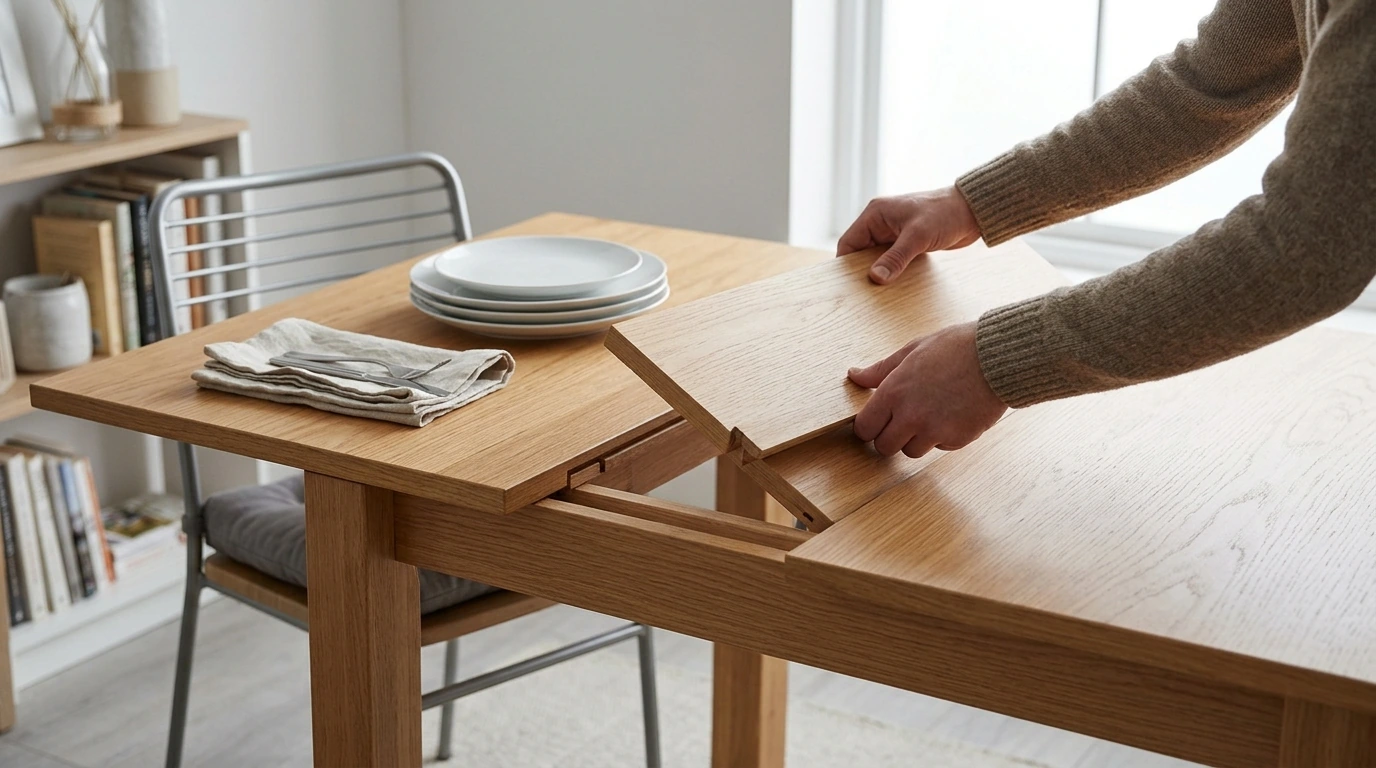
What is the best extendable dining table for small spaces?
The best extendable dining table for a small space is one that fits comfortably in its everyday position and opens only when you need extra seating. A minimalist Nordic-style table is a versatile choice: its simple lines keep a compact room feeling uncluttered, while an extension lets you welcome more people without dedicating that floor space to a larger table all week.
For a closer look at this approach, explore our guide to an expandable Nordic dining table for six. It offers ideas for balancing a clean design with flexible seating.
How should you choose the right table?
Start with the everyday footprint
Measure the area where you plan to place the table, then consider how you move through the room. Allow space to pull out chairs and walk around occupied seats. A table that technically fits but blocks a doorway or makes chairs difficult to use will feel too large.
Next, measure the space needed when the table is fully extended. If you plan to open it for guests, make sure you can still reach the kitchen and move around the dining area. You may need to rearrange nearby furniture for larger gatherings.
Choose a shape that suits your room
Rectangular tables work well along a wall or in a narrow dining area, and an extension can add length for guests. A round table can make conversation easy and soften a room with angular furniture. Choose the shape that gives you the clearest paths around the table, rather than relying on the room’s size alone.
Consider chairs and extension storage
Compact chairs that tuck under the tabletop help keep the area open between meals. Look at the table’s legs and apron, too: their placement affects how easily chairs fit and how much legroom you have.
Before choosing an extension design, consider where its leaves will go when they are not in use. Our team recommends making room for any separate leaves ahead of time, so expanding the table remains convenient.
What makes a table practical every day?
Choose a surface and finish that suit your routine, whether you use the table for quick breakfasts, work, or family dinners. A straightforward design can pair easily with existing furniture, while a manageable extension mechanism makes the table more useful when guests arrive.
FAQ
Where should you store dining table extension leaves?
Store separate leaves flat in a dry, protected place where they will not be scratched or exposed to major temperature changes. If the table has built-in leaf storage, use the space provided.
Recommended for you

Vans Peer Influence: How to Spot Sneaker Trends
Nov 27, 2026
How Much Is a YSL T-Shirt? Prices and Buying Tips
Nov 28, 2026









Leave a comment