-
Shop
- Advanced Technologies
- AI Skills
- AI Skills for Creators & Freelancers
- AI Client Management
- AI Ethics
- AI Mindset
- AI Tools & Prompts
- AI Writing & Content Creation
- Audio, Voice & Music
- Design & Visual Creation
- Email, Messaging & Communication
- Freelancing & Business
- Marketing, Ads & Conversion
- Productivity, Workflow & Automation
- SEO & Search Optimization
- Social Media Content & Growth
- Strategy, Planning & Analytics
- Video Creation & Editing
- Apple Accessories
- Bathroom
- Beauty
- Best-Sellers
- Car Accessories
- Car Buying & Ownership
- Confidence
- Dating & Social Skills
- Digital Resources
- Education & Learning
- Family & Parenting
- Fashion
- Alexander McQueen
- Bags
- Balenciaga
- Blazers
- Bottega Veneta
- Brunello Cucinelli
- Burberry
- Chanel
- Chloé
- Dior
- Dolce & Gabbana
- Dresses
- Etro
- Fendi
- Gucci
- Jacquemus
- Jil Sander
- Kiton
- Luggage
- Miu Miu
- Off-White
- Outerwear
- Prada
- Rick Owens
- Saint Laurent
- Shoes
- The Row
- Tom Ford
- Valentino
- Valentino Garavani
- Versace
- Vivienne Westwood
- Fashion Accessories
- Furniture
- Gadgets
- Health & Beauty
- Health & Wellness
- Home Decor
- Home Electronics
- Home Styling & Organization
- Home Supplies
- Kids & Babies
- Kitchen
- Legend Footwear Brands Collection
- Lighting
- Luxury Brands Collection
- Online Business for Beginners
- Parenting & Child Development
- Patio, Lawn & Garden
- Personal Growth
- Personal Style & Fashion
- Pet Care
- Pet Lifestyle & Wellness
- Pet Supplies
- Pets
- Smart Amazon Shopping
- Smart Home Living Guides
- Super Deals
- Travel
- Travel & Adventure
- Wealth
- Wellness
- Popular
- Best deals
Expandable Nordic Dining Table for 6: Minimalist Guide
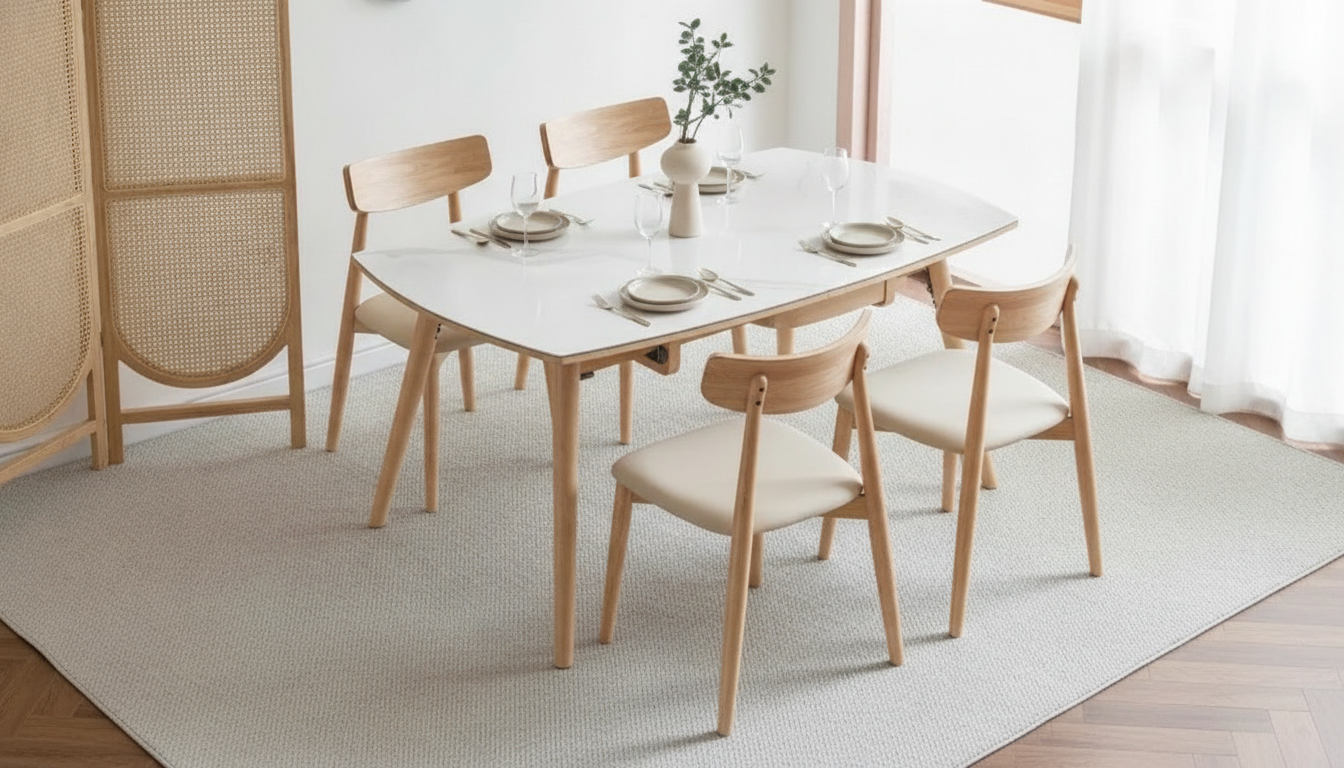
Expandable Nordic Dining Table for 6 for a Modern Minimalist Home
A Nordic-inspired expandable dining table keeps a minimalist space calm and uncluttered while still being ready for everyday meals, remote-work sessions, and last-minute guests. The right choice comes down to practical details—proportions, extension style, finishes, seating comfort, and care—so the table looks intentional in a modern home and performs well year-round.
Why an expandable Nordic dining table fits minimalist interiors
Minimalist rooms feel best when the “big pieces” do the heavy lifting without looking heavy. Nordic dining tables are known for clean lines, light visual weight, and materials that read warm instead of loud—ideal in apartments and open-plan layouts where the dining area is always in view.
- Clean geometry helps the space feel open, especially when your dining area shares sightlines with the kitchen or living room.
- Expandable functionality gives you hosting capacity without living with an oversized footprint every day.
- Easy styling compatibility with neutral palettes, natural textures, and simple lighting like pendants or linear fixtures.
- Less clutter overall, since one well-made expandable table can replace extra folding tables and “temporary” surfaces.
Size planning: everyday footprint vs. hosting mode
Start with the room, not the product page. Measure the area where the table will live day-to-day, then measure the fully extended footprint you’ll need for guests. A comfortable layout depends as much on clearances as it does on tabletop length.
- Plan circulation first, especially near door swings, kitchen runs, and high-traffic routes.
- Map chair clearance so chairs can slide out without colliding with walls, radiators, or sideboards.
- If the table sits near a wall daily, confirm it can still open fully—some setups require pulling the table away from the wall before extending.
- For rectangular tables, align the long side with the room’s longest axis to reduce pinch points and keep the layout balanced.
Quick spacing guide for comfortable dining
| Layout element | Recommended clearance | Why it matters |
|---|---|---|
| Space from table edge to wall/furniture (minimum) | 24 in (61 cm) | Allows basic passage when chairs are tucked in |
| Space from table edge to wall/furniture (comfortable) | 36 in (91 cm) | Lets people walk behind seated diners |
| Chair width per person (typical) | 18–24 in (46–61 cm) | Prevents crowding at place settings |
| Tabletop height (common range) | 28–30 in (71–76 cm) | Works with most dining chair seat heights |
For additional clearance context, the ADA Standards for Accessible Design are a helpful reference point when you want walkways that feel uncramped.
Extension styles and what to look for
Extension design matters in minimalist homes because storage, speed, and “visual quiet” are part of the experience. Look for an extension that you’ll actually use—smooth operation beats complicated mechanics.
- Butterfly leaf (stored inside): a favorite for minimalist spaces because the leaf stays hidden, with no separate storage needed.
- Drop-in leaf (stored elsewhere): often simple and sturdy, but you’ll need a dedicated storage spot to keep the leaf flat and protected.
- End extension vs. center extension: center extensions often keep leg spacing consistent; end extensions can work beautifully when the base is designed to support it.
- Stability in extended mode: prioritize robust rails, a secure locking feel, and seams that sit flush and even.
If possible, check whether the extended halves align without a ridge; that small detail affects everything from writing on paper to sliding serving dishes across the surface.
Materials and finishes that stay calm (and practical)
Nordic style is often about restraint—light-toned wood, softly matte surfaces, and details that don’t compete with the rest of the room. The finish you choose also decides how forgiving the table is during everyday life.
- Light-toned wood or wood-look finishes help a table feel airy instead of bulky, especially in smaller rooms.
- Veneer or engineered tops can be durable, but they benefit from coasters and heat protection to reduce moisture rings and hot-dish marks.
- Matte finishes tend to hide fingerprints and micro-scratches better than high-gloss surfaces.
- Streamlined upholstered chairs can soften the look while keeping a Scandinavian feel—stick to simple silhouettes.
For a practical overview of wood furniture upkeep, the Smithsonian Museum Conservation Institute offers clear, conservation-minded basics that translate well to dining furniture.
Seating comfort for six: chairs, benches, and mixed sets
A table that expands to six is most comfortable when the seating plan is intentional. Comfort isn’t only about padding—it’s also about legroom, base clearance, and how easily people can get in and out.
Styling ideas that keep the tabletop functional
Care and longevity in a busy home
Expandable Nordic dining table pick: made for minimalist hosting
Expandable Nordic Dining Table for 6 – Modern Minimalist Home Furniture (In stock) — $1850.99
Also available
If you enjoy keeping a cohesive aesthetic across projects (from interiors to creative work), this digital item is also in stock: AI-Powered Brand Magic: Craft Your Freelance Style Guide Fast | Ebook on AI to Create a Freelance Brand Style Guide for Creatives & Solopreneurs — $11.99
FAQ
How much space is needed around an expandable dining table?
Plan for about 24 inches minimum around the table for tighter pathways, and closer to 36 inches for comfortable movement behind chairs. Always account for the extended length so guests aren’t squeezed when the leaf is in.
Is an extendable dining table stable when fully extended?
It can be, but stability depends on the rail system, locks, and base design. Look for even seams, a secure locking action, and minimal wobble when you press down near the ends.
What’s the easiest way to protect a minimalist tabletop from heat and stains?
Use coasters, trivets, and placemats, and wipe spills quickly—especially near seams. Stick to mild cleaning methods and consider a subtle runner or tray to reduce daily wear without adding clutter.
Recommended for you
Does Uncovered Interest Parity Hold in Korea?
Jul 30, 2026









Leave a comment