-
Shop
- Advanced Technologies
- AI Skills
- AI Skills for Creators & Freelancers
- AI Client Management
- AI Ethics
- AI Mindset
- AI Tools & Prompts
- AI Writing & Content Creation
- Audio, Voice & Music
- Design & Visual Creation
- Email, Messaging & Communication
- Freelancing & Business
- Marketing, Ads & Conversion
- Productivity, Workflow & Automation
- SEO & Search Optimization
- Social Media Content & Growth
- Strategy, Planning & Analytics
- Video Creation & Editing
- Apple Accessories
- Bathroom
- Beauty
- Best-Sellers
- Car Accessories
- Car Buying & Ownership
- Confidence
- Dating & Social Skills
- Digital Resources
- Education & Learning
- Family & Parenting
- Fashion
- Alexander McQueen
- Bags
- Balenciaga
- Blazers
- Bottega Veneta
- Brunello Cucinelli
- Burberry
- Chanel
- Chloé
- Dior
- Dolce & Gabbana
- Dresses
- Etro
- Fendi
- Gucci
- Jacquemus
- Jil Sander
- Kiton
- Luggage
- Miu Miu
- Off-White
- Outerwear
- Prada
- Rick Owens
- Saint Laurent
- Shoes
- The Row
- Tom Ford
- Valentino
- Valentino Garavani
- Versace
- Vivienne Westwood
- Fashion Accessories
- Furniture
- Gadgets
- Health & Beauty
- Health & Wellness
- Home Decor
- Home Electronics
- Home Styling & Organization
- Home Supplies
- Kids & Babies
- Kitchen
- Legend Footwear Brands Collection
- Lighting
- Luxury Brands Collection
- Online Business for Beginners
- Parenting & Child Development
- Patio, Lawn & Garden
- Personal Growth
- Personal Style & Fashion
- Pet Care
- Pet Lifestyle & Wellness
- Pet Supplies
- Pets
- Smart Amazon Shopping
- Smart Home Living Guides
- Super Deals
- Travel
- Travel & Adventure
- Wealth
- Wellness
- Popular
- Best deals
Expandable Dining Tables: 5 Drawbacks to Know
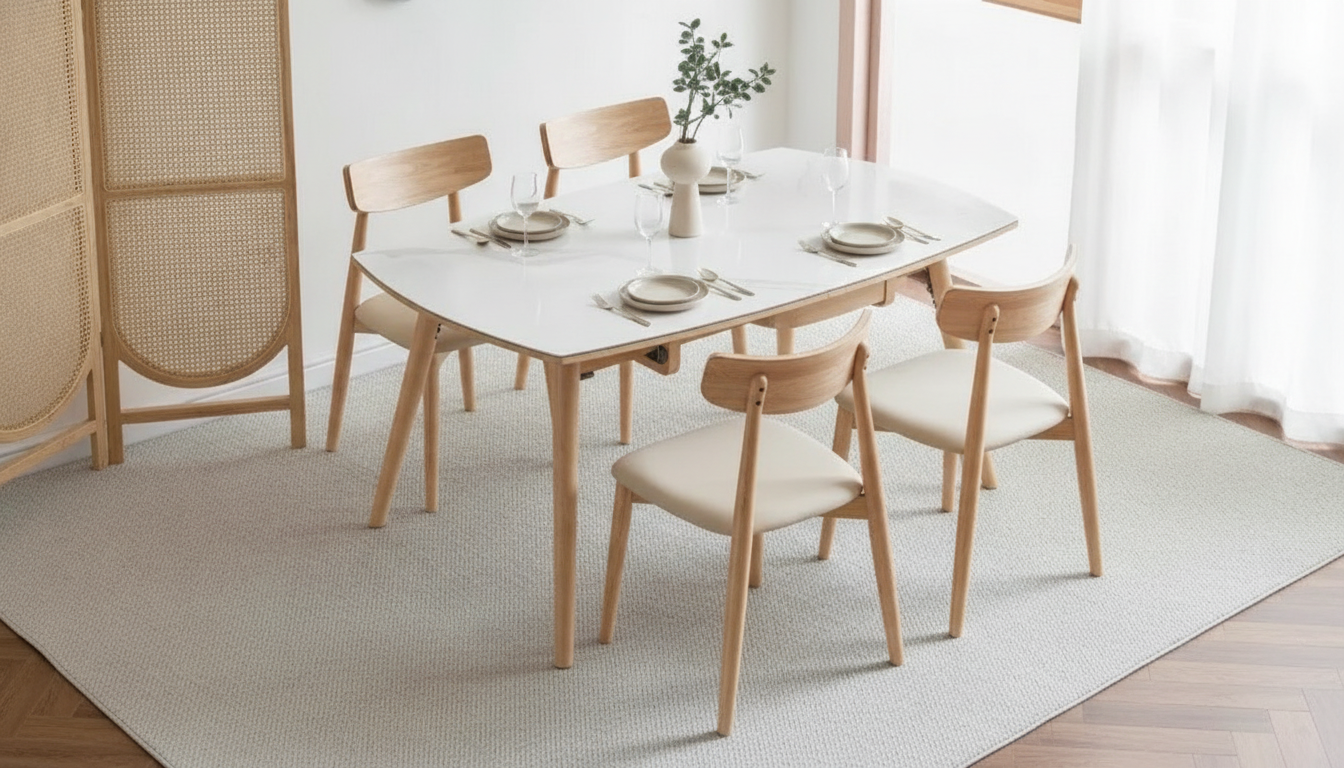
What are the disadvantages of using an expandable dining table?
An expandable dining table gives you flexibility, but that convenience comes with tradeoffs. The main drawbacks are extra space needs, a mechanism to maintain, and possible differences in stability or appearance between the everyday and extended setups. If you’re comparing styles, see our guide to expandable Nordic dining tables.
It needs room to expand
A table that fits your dining area when closed may crowd it when extended. You’ll need enough clearance not just for the tabletop, but also for chairs to move back and people to walk around them. Before choosing a table, measure the room in both configurations and consider nearby doors, cabinets, and walkways.
The leaves need a place to live
Some designs store extension leaves inside the table; others require separate storage. Loose leaves can be awkward to lift and may take up closet or under-bed space. If your household plans to expand the table often, an integrated storage design can make setup simpler.
Setup can take effort
Opening the table, aligning the sections, and fitting the leaves takes time. Depending on the design, you may need to move dishes or clear the surface first, and larger leaves can be cumbersome for one person to handle. A smooth extension mechanism and leaves that are manageable to lift help reduce the hassle.
The extended surface may not feel identical
At the joint, you may notice a seam or a slight difference in height, grain, or finish. The tabletop can also feel less solid if the leaves are not seated properly or the supports are not engaged. Follow the maker’s setup instructions, and avoid placing heavy items over an unsupported section.
There may be a style or cost tradeoff
The central seam and extension hardware can affect the table’s clean look, especially when it is closed. Expandable models may also cost more than fixed tables with similar materials and styling. Consider how often you’ll use the extra space: if you rarely host, a fixed table may be the simpler value.
How can you limit these drawbacks?
Choose a table that fits your room in both positions, suits the way you entertain, and has a practical leaf-storage solution. Test the extension if you can, and make sure the leaves align and the supports feel secure before serving a meal.
FAQ
How do you choose the right table shape for a dining room?
Match the shape to your room layout and how people move through it. A round table can ease circulation in a compact space, while a rectangular table often works well in a longer room.










Leave a comment