-
Shop
- Advanced Technologies
- AI Skills
- AI Skills for Creators & Freelancers
- AI Client Management
- AI Ethics
- AI Mindset
- AI Tools & Prompts
- AI Writing & Content Creation
- Audio, Voice & Music
- Design & Visual Creation
- Email, Messaging & Communication
- Freelancing & Business
- Marketing, Ads & Conversion
- Productivity, Workflow & Automation
- SEO & Search Optimization
- Social Media Content & Growth
- Strategy, Planning & Analytics
- Video Creation & Editing
- Apple Accessories
- Bathroom
- Beauty
- Best-Sellers
- Car Accessories
- Car Buying & Ownership
- Confidence
- Dating & Social Skills
- Digital Resources
- Education & Learning
- Family & Parenting
- Fashion
- Alexander McQueen
- Bags
- Balenciaga
- Blazers
- Bottega Veneta
- Brunello Cucinelli
- Burberry
- Chanel
- Chloé
- Dior
- Dolce & Gabbana
- Dresses
- Etro
- Fendi
- Gucci
- Jacquemus
- Jil Sander
- Kiton
- Luggage
- Miu Miu
- Off-White
- Outerwear
- Prada
- Rick Owens
- Saint Laurent
- Shoes
- The Row
- Tom Ford
- Valentino
- Valentino Garavani
- Versace
- Vivienne Westwood
- Fashion Accessories
- Furniture
- Gadgets
- Health & Beauty
- Health & Wellness
- Home Decor
- Home Electronics
- Home Styling & Organization
- Home Supplies
- Kids & Babies
- Kitchen
- Legend Footwear Brands Collection
- Lighting
- Luxury Brands Collection
- Online Business for Beginners
- Parenting & Child Development
- Patio, Lawn & Garden
- Personal Growth
- Personal Style & Fashion
- Pet Care
- Pet Lifestyle & Wellness
- Pet Supplies
- Pets
- Smart Amazon Shopping
- Smart Home Living Guides
- Super Deals
- Travel
- Travel & Adventure
- Wealth
- Wellness
- Popular
- Best deals
Stop Clothes From Shrinking: Wash, Dry & Store Right
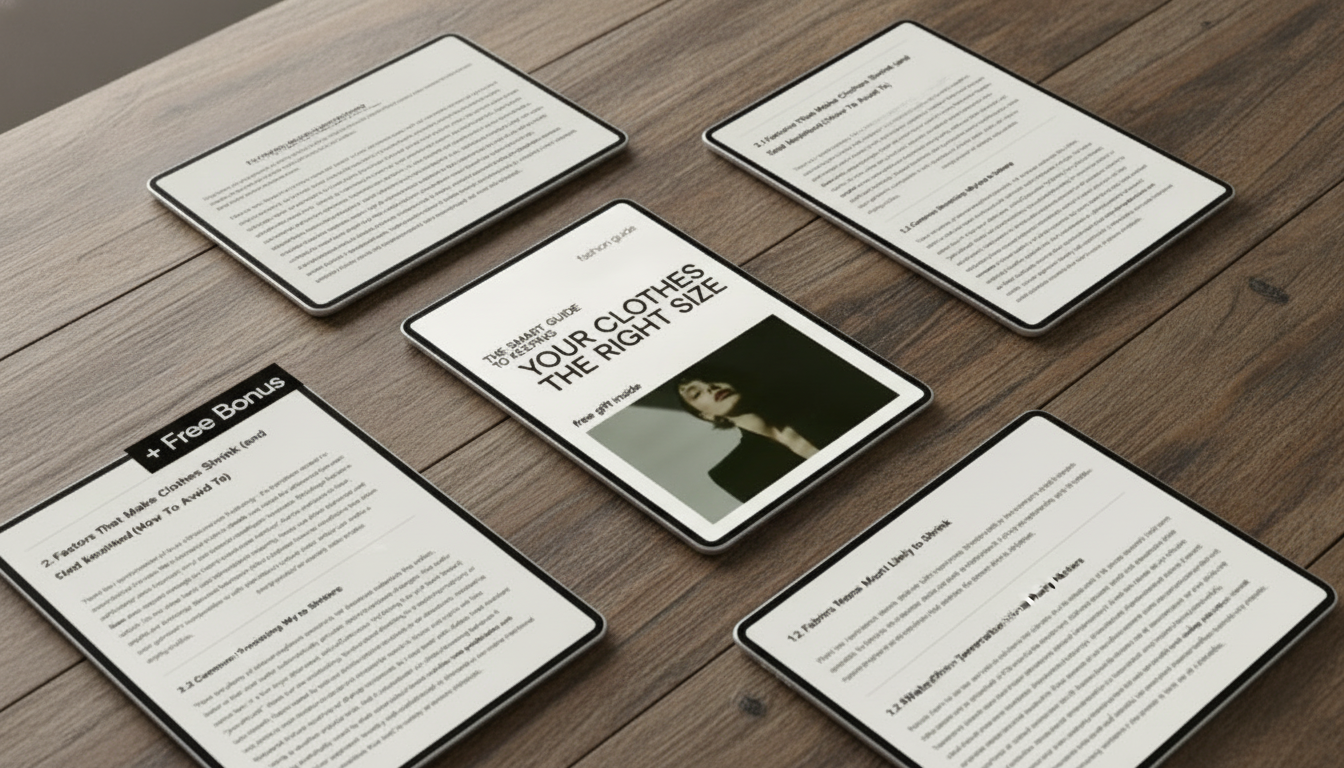
Keeping Clothes the Right Size: A Smart, Practical System for Washing, Drying, and Long-Term Care
Clothes change size for predictable reasons: heat, agitation, water absorption, and fiber type. A simple care system—sorting smarter, choosing the right settings, drying with intention, and storing correctly—prevents most shrinking and helps garments keep their original fit for years.
If you want an easy, repeatable routine you can keep near the laundry area, The Smart Guide to Keeping Your Clothes the Right Size – A Practical Guide on how to prevent clothes from shrinking, Washing, Drying & Long-Term Clothing Care is a quick-reference option you can follow load after load.
Why Clothes Shrink (and When It’s Permanent)
Shrinkage usually isn’t mysterious—it’s chemistry and mechanics. Knowing which forces cause size changes makes it much easier to prevent them.
- Heat is the biggest trigger: hot wash water and high dryer temperatures tighten many fibers, especially cotton and wool.
- Agitation and friction accelerate fiber contraction and surface wear, making fabrics feel tighter over time.
- “Relaxation shrinkage” (often after the first wash) happens when fibers return to a less-stretched state.
- Felting shrinkage in wool is typically irreversible; it happens with heat + moisture + movement.
- Blends behave differently: a small percentage of synthetic fiber can reduce shrink risk, but not eliminate it.
Care labels are designed to prevent these outcomes when followed; the FTC’s overview of labeling requirements is a helpful baseline: FTC Care Labeling Rule.
Fabric-by-Fabric Care Rules That Prevent Size Changes
The safest “one rule” is to start gentler than you think you need—then increase only if soil level demands it.
- Cotton: favor cold water, gentle cycles, and low-heat or air-dry; pre-shrunk labels help, but dryers can still tighten fibers.
- Wool and cashmere: avoid temperature swings and agitation; use a wool cycle or hand wash, reshape while damp, dry flat.
- Denim: wash less often, turn inside out, cold water; air-dry to preserve both fit and color.
- Synthetics (polyester, nylon): resist shrinking but can warp with high heat; use low heat to protect elasticity and shape.
- Rayon/viscose: highly shrink-prone; cold wash, minimal agitation, avoid tumble drying, and reshape carefully.
Quick Settings Guide by Fabric
| Fabric | Wash Water | Cycle | Drying Method | Key Note |
|---|---|---|---|---|
| Cotton | Cold–Warm (prefer cold) | Normal–Gentle | Air-dry or low heat | High heat commonly tightens fit |
| Wool/Cashmere | Cold | Wool/Delicate | Flat dry | Avoid agitation to prevent felting |
| Denim | Cold | Gentle/Normal (inside out) | Air-dry | Heat can tighten and fade |
| Polyester/Nylon | Cold–Warm | Normal | Low heat | High heat can deform fibers |
| Rayon/Viscose | Cold | Delicate | Air-dry (reshape) | Most likely to shrink/warp |
For wool-specific guidance (especially to avoid felting), Woolmark’s care recommendations are a reliable standard: Woolmark – Caring for Wool and Woolmark Products.
A Simple Laundry Workflow That Protects Fit
Consistency is the secret. When the same garment gets the same treatment every time, “random” size surprises largely disappear.
- Sort by more than color: separate heavies (towels, denim) from delicates to reduce friction and stretching.
- Use the right load size: overloading increases wrinkling and agitation; underloading can increase impact and wear.
- Choose detergents that rinse clean: excess detergent can stiffen fibers and make fabrics feel tighter.
- Skip “just in case” hot water: cold water is usually enough for everyday soil and is gentler on fibers.
- Treat stains before washing to avoid re-washing, which compounds wear and shrink risk.
For a straightforward refresher on everyday laundry fundamentals, the American Cleaning Institute is a practical reference: American Cleaning Institute – Laundry Basics.
Drying Without Shrinking: Heat Control and Timing
Most fit problems happen after the wash. The dryer is efficient—but it’s also where fibers get the most sustained heat and tumbling friction.
For premium outerwear and statement pieces, gentle drying is especially important. If you’re caring for a structured, high-end item like the Versace Quilted Down Jacket with Paisley Pattern and Monogram Embroidery, prioritize low heat (or air-dry) and avoid long dryer cycles that can stress seams and trims.
Long-Term Clothing Care That Preserves Size
When Something Already Shrunk: Safe Recovery Steps
A Ready-to-Use Reference for Keeping Fit Consistent
- Use a repeatable checklist for sorting, settings, and drying so the same garment gets the same treatment every time.
- Build a “no-high-heat” default, then make exceptions only when fabric and label explicitly allow it.
- Keep a small kit: stain pre-treater, mesh bags, sweater drying surface, and a lint roller to reduce re-washes.
- For a step-by-step system covering washing, drying, and long-term routines, use the practical guide as a quick reference: The Smart Guide to Keeping Your Clothes the Right Size – A Practical Guide on how to prevent clothes from shrinking, Washing, Drying & Long-Term Clothing Care.
FAQ
Does cold water completely prevent shrinking?
Cold water reduces shrink risk, but it doesn’t eliminate it—dryer heat, heavy agitation, and fibers like rayon or wool can still change size. Pair cold washing with gentle cycles and low/no-heat drying for the most consistent fit.
Why do clothes shrink more in the dryer than in the washer?
The dryer combines sustained heat with tumbling friction, and over-drying keeps fibers hot longer than necessary. Using low heat and removing items “damp-dry” before finishing flat or on a hanger helps prevent tightening.
Can shrunken cotton be unshrunk safely?
Sometimes, slightly: soak in lukewarm water with a small amount of conditioner, then gently reshape on a towel and dry flat. Results are limited, and pulling too hard can distort seams or stretch the garment unevenly.
















Leave a comment