-
Shop
- Advanced Technologies
- AI Skills
- AI Skills for Creators & Freelancers
- AI Client Management
- AI Ethics
- AI Mindset
- AI Tools & Prompts
- AI Writing & Content Creation
- Audio, Voice & Music
- Design & Visual Creation
- Email, Messaging & Communication
- Freelancing & Business
- Marketing, Ads & Conversion
- Productivity, Workflow & Automation
- SEO & Search Optimization
- Social Media Content & Growth
- Strategy, Planning & Analytics
- Video Creation & Editing
- Apple Accessories
- Bathroom
- Beauty
- Best-Sellers
- Car Accessories
- Car Buying & Ownership
- Confidence
- Dating & Social Skills
- Digital Resources
- Education & Learning
- Family & Parenting
- Fashion
- Alexander McQueen
- Bags
- Balenciaga
- Blazers
- Bottega Veneta
- Brunello Cucinelli
- Burberry
- Chanel
- Chloé
- Dior
- Dolce & Gabbana
- Dresses
- Etro
- Fendi
- Gucci
- Jacquemus
- Jil Sander
- Kiton
- Luggage
- Miu Miu
- Off-White
- Outerwear
- Prada
- Rick Owens
- Saint Laurent
- Shoes
- The Row
- Tom Ford
- Valentino
- Valentino Garavani
- Versace
- Vivienne Westwood
- Fashion Accessories
- Furniture
- Gadgets
- Health & Beauty
- Health & Wellness
- Home Decor
- Home Electronics
- Home Styling & Organization
- Home Supplies
- Kids & Babies
- Kitchen
- Legend Footwear Brands Collection
- Lighting
- Luxury Brands Collection
- Online Business for Beginners
- Parenting & Child Development
- Patio, Lawn & Garden
- Personal Growth
- Personal Style & Fashion
- Pet Care
- Pet Lifestyle & Wellness
- Pet Supplies
- Pets
- Smart Amazon Shopping
- Smart Home Living Guides
- Super Deals
- Travel
- Travel & Adventure
- Wealth
- Wellness
- Popular
- Best deals
LLC vs Sole Proprietor: Choose the Right Startup Setup

Business Basics: LLC or Sole Proprietor? A Clear Startup Path for New Business Owners
Choosing between an LLC and a sole proprietorship shapes taxes, liability, paperwork, and how a new venture looks to clients and banks. The right choice depends less on “what most people do” and more on your risk level, your growth plans, and how much admin time you can realistically handle in the first few months. Below is a plain-language breakdown of both options, the most common early missteps, and a simple decision framework that helps you move forward with confidence.
Start With the Decision That Changes Everything: Risk, Taxes, and Complexity
Before comparing forms and fees, start with three drivers: personal liability exposure, tax flexibility, and the amount of administration you can sustain in the first 90 days without dropping the ball on sales and delivery.
- Risk: If a mistake could cause meaningful financial damage (property damage, injury, a large refund dispute, a product issue), liability protection matters more than convenience.
- Taxes: Both structures can be tax-efficient depending on income, deductions, and elections; what matters is planning and clean records from day one.
- Complexity tolerance: A structure that demands filings you won’t keep up with can backfire. Choose the most protective option you can maintain consistently.
Also match the structure to the business model. Selling a low-risk service from home is different from hiring contractors, leasing space, or shipping physical products. And remember: a structure is not a life sentence. Many businesses begin simply and convert later when revenue, risk, or growth plans change.
Sole Proprietor Basics: Fast Setup, Simple Taxes, Higher Personal Risk
A sole proprietorship is often the default when you start doing business in your own name (or with a DBA, depending on local rules). It’s typically best for a low-risk testing phase—think early-stage service work, a small side business, or a short validation run.
- Simple tax flow-through: Business income and expenses typically land on your personal return (often via Schedule C), which keeps filing straightforward but requires planning for self-employment taxes. The IRS self-employed hub is a helpful starting point for the basics.
- Liability is the tradeoff: In general, there’s no legal separation between you and the business. Certain debts and legal claims can reach personal assets unless you’re protected by strong contracts and appropriate insurance.
- Credibility is still possible: Even without an LLC, professional signals can be strong with a business bank account, clean invoices, written agreements, and consistent branding.
| Area | What to set up | Why it matters |
|---|---|---|
| Money | Separate business checking + bookkeeping categories | Cleaner taxes, easier tracking, stronger audit trail |
| Tax basics | Quarterly estimated tax habit (if needed) | Avoids surprise bills and underpayment penalties |
| Paperwork | Client contract or service agreement | Sets expectations and reduces disputes |
| Protection | Appropriate insurance for the industry | Reduces financial impact of claims and mistakes |
LLC Basics: Liability Separation and More Options as You Grow
LLC vs Sole Proprietor: Side-by-Side Comparison for Real-World Decisions
| Category | Sole Proprietor | LLC |
|---|---|---|
| Setup effort | Minimal (often automatic when operating) | State formation filing + ongoing compliance |
| Personal liability | Generally not separated | Often separated when properly maintained |
| Taxes | Pass-through to owner | Pass-through by default; potential elections depending on eligibility |
| Credibility | Can be strong with good systems | Often perceived as more established |
| Ongoing admin | Lower | Moderate (reports, fees, documentation) |
| Best fit | Low-risk testing, early-stage services | Higher-risk work, scaling, employees/contractors, inventory |
The First 30 Days Checklist (Either Structure)
For a quick overview of common structures and how they’re generally treated, the U.S. Small Business Administration (SBA) guide to choosing a business structure is a practical reference point.
Common Mistakes That Cause Expensive Headaches
A Practical Decision Framework: Choose Based on One “Yes”
If the business is low-risk and still validating demand, operating as a sole proprietor can be a temporary phase—paired with appropriate insurance and solid contracts. When you’re uncertain, a short consult with a CPA or attorney can clarify state rules, tax implications, and compliance obligations. For tax basics as you ramp up, the IRS Self-Employed Individuals Tax Center is a strong starting point.
Guided Startup Support: A Structured eBook for New Owners
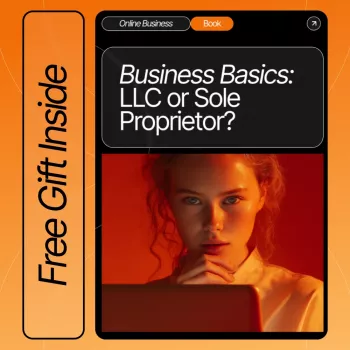
When decision fatigue hits, a structured guide can reduce overwhelm by putting the steps in order: choosing a structure, setting up the essentials, and avoiding the “small misses” that cause delays and fees. If you want a plain-language walkthrough you can follow quickly, consider Business Basics: LLC or Sole Proprietor? (Digital Download).
Once the legal and financial foundation is set, the next credibility boost is brand consistency—especially for service providers and freelancers. For a fast way to define your look, tone, and client-facing basics, explore AI-Powered Brand Magic: Craft Your Freelance Style Guide Fast.
FAQ
Is an LLC always better than being a sole proprietor?
No. “Better” depends on risk, revenue, growth plans, and how much ongoing admin you can manage. An LLC can add protection and structure, but it also comes with filings, fees, and upkeep that may not be necessary for a low-risk validation phase.
Can a business start as a sole proprietor and switch to an LLC later?
Yes, and it’s common. The exact steps vary by state, but switching often involves updating bank accounts, contracts, invoices, and vendor/client records. Professional guidance can help avoid tax and compliance mistakes during the changeover.
What’s the biggest early step that prevents financial messes?
Separating finances is the biggest win: use a dedicated business bank account, keep clean bookkeeping, and set aside money for taxes as revenue comes in. Pair that with written agreements so payment terms and scope are clear from the start.
Recommended for you


Stop Clothes From Shrinking: Wash, Dry & Store Right
Jul 31, 2026













Leave a comment