-
Shop
- Advanced Technologies
- AI Skills
- AI Skills for Creators & Freelancers
- AI Client Management
- AI Ethics
- AI Mindset
- AI Tools & Prompts
- AI Writing & Content Creation
- Audio, Voice & Music
- Design & Visual Creation
- Email, Messaging & Communication
- Freelancing & Business
- Marketing, Ads & Conversion
- Productivity, Workflow & Automation
- SEO & Search Optimization
- Social Media Content & Growth
- Strategy, Planning & Analytics
- Video Creation & Editing
- Apple Accessories
- Bathroom
- Beauty
- Best-Sellers
- Car Accessories
- Car Buying & Ownership
- Confidence
- Dating & Social Skills
- Digital Resources
- Education & Learning
- Family & Parenting
- Fashion
- Alexander McQueen
- Bags
- Balenciaga
- Blazers
- Bottega Veneta
- Brunello Cucinelli
- Burberry
- Chanel
- Chloé
- Dior
- Dolce & Gabbana
- Dresses
- Etro
- Fendi
- Gucci
- Jacquemus
- Jil Sander
- Kiton
- Luggage
- Miu Miu
- Off-White
- Outerwear
- Prada
- Rick Owens
- Saint Laurent
- Shoes
- The Row
- Tom Ford
- Valentino
- Valentino Garavani
- Versace
- Vivienne Westwood
- Fashion Accessories
- Furniture
- Gadgets
- Health & Beauty
- Health & Wellness
- Home Decor
- Home Electronics
- Home Styling & Organization
- Home Supplies
- Kids & Babies
- Kitchen
- Legend Footwear Brands Collection
- Lighting
- Luxury Brands Collection
- Online Business for Beginners
- Parenting & Child Development
- Patio, Lawn & Garden
- Personal Growth
- Personal Style & Fashion
- Pet Care
- Pet Lifestyle & Wellness
- Pet Supplies
- Pets
- Smart Amazon Shopping
- Smart Home Living Guides
- Super Deals
- Travel
- Travel & Adventure
- Wealth
- Wellness
- Popular
- Best deals
The Right Portion: Feeding Your Aquarium Fish
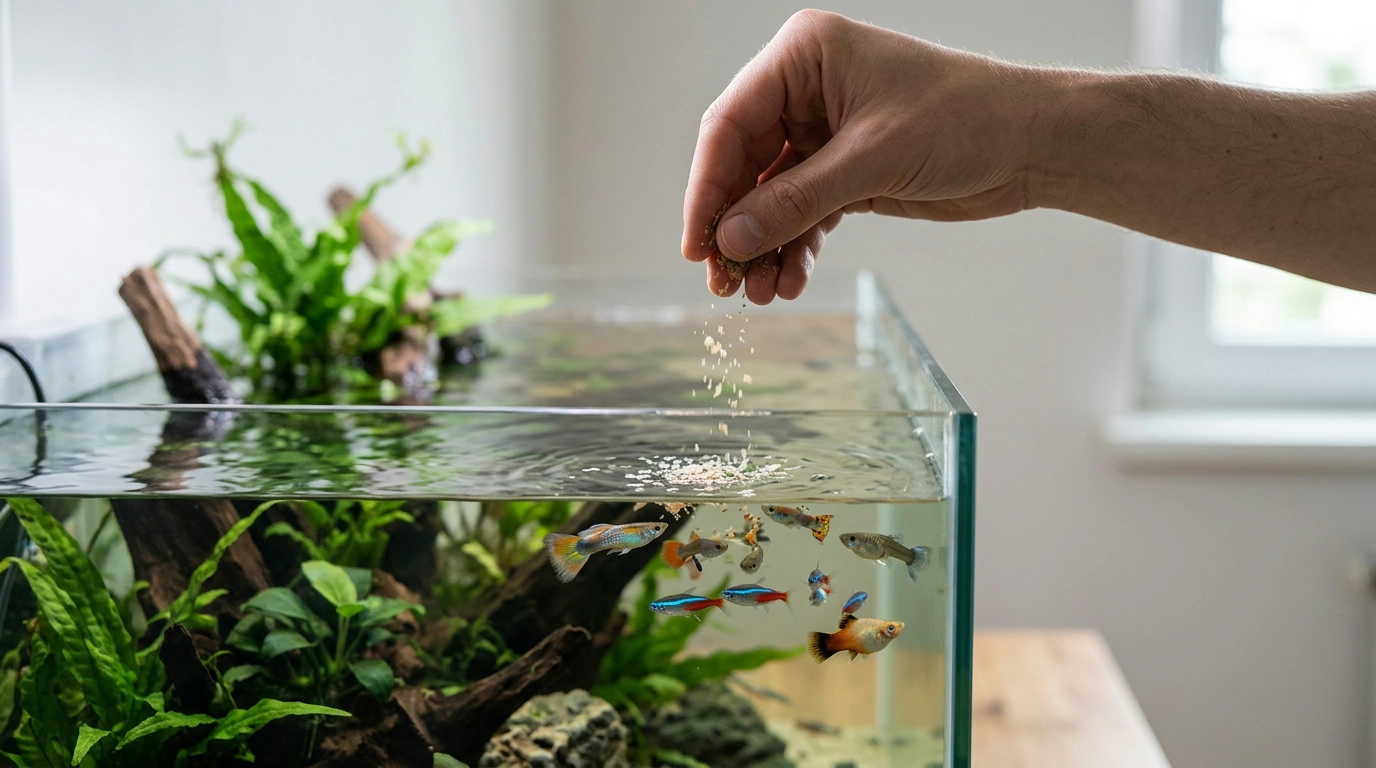
How much food should I feed my fish in my aquarium?
Start with a small portion your fish can finish in about two to three minutes, then adjust based on what you see. The right amount depends on the species, size, age, and number of fish, so aquarium size alone isn’t a reliable measure. When you feed, watch the fish eat and remove uneaten food promptly.
How can you find the right portion?
Offer a little at a time rather than dropping in a large pinch all at once. If the food disappears quickly and every fish gets a chance to eat, you can add a small amount more. Stop when the fish lose interest or food begins settling on the bottom.
Feed in a consistent spot so you can see who is eating. If one fish is outcompeting others, try offering food in more than one area. For bottom-dwelling fish, choose food that reaches them rather than assuming flakes at the surface will be enough.
Does food type affect how much you should feed?
Yes. Choose food suited to your fish’s species and feeding habits, such as flakes for surface feeders or sinking pellets and wafers for fish that feed lower in the aquarium. Follow the package’s portion guidance as a starting point, but use your fish’s appetite and uneaten food to fine-tune it. Different foods vary in size and density, so a pinch of one product may not equal a pinch of another.
How often should aquarium fish eat?
Many adult aquarium fish do well with one or two small feedings a day, but feeding schedules vary by species and life stage. Young, growing fish may need more frequent meals, while some species have different needs. Use care instructions for your fish as your guide, and avoid adding extra food just because the fish gather at the glass; they may be responding to your presence.
What are signs you may be feeding too much?
Watch for food left uneaten, a dirty substrate, or cloudy water after meals. Excess food can break down and affect water quality. Reduce the portion, remove leftovers, and keep up with routine aquarium maintenance. If a fish consistently won’t eat, check that the food suits its needs and look for other changes in its behavior or condition.
For a practical routine, visit our daily fish feeding checklist. Our team recommends making small adjustments and observing your fish rather than relying on a fixed scoop size.
FAQ
How often should I clean an aquarium filter?
Clean or rinse filter media when it becomes clogged or flow slows, following the filter manufacturer’s instructions. Rinse reusable biological media in removed aquarium water rather than untreated tap water, and avoid replacing all biological media at once.















Leave a comment