-
Shop
- Advanced Technologies
- AI Skills
- AI Skills for Creators & Freelancers
- AI Client Management
- AI Ethics
- AI Mindset
- AI Tools & Prompts
- AI Writing & Content Creation
- Audio, Voice & Music
- Design & Visual Creation
- Email, Messaging & Communication
- Freelancing & Business
- Marketing, Ads & Conversion
- Productivity, Workflow & Automation
- SEO & Search Optimization
- Social Media Content & Growth
- Strategy, Planning & Analytics
- Video Creation & Editing
- Apple Accessories
- Bathroom
- Beauty
- Best-Sellers
- Car Accessories
- Car Buying & Ownership
- Confidence
- Dating & Social Skills
- Digital Resources
- Education & Learning
- Family & Parenting
- Fashion
- Alexander McQueen
- Bags
- Balenciaga
- Blazers
- Bottega Veneta
- Brunello Cucinelli
- Burberry
- Chanel
- Chloé
- Dior
- Dolce & Gabbana
- Dresses
- Etro
- Fendi
- Gucci
- Jacquemus
- Jil Sander
- Kiton
- Luggage
- Miu Miu
- Off-White
- Outerwear
- Prada
- Rick Owens
- Saint Laurent
- Shoes
- The Row
- Tom Ford
- Valentino
- Valentino Garavani
- Versace
- Vivienne Westwood
- Fashion Accessories
- Furniture
- Gadgets
- Health & Beauty
- Health & Wellness
- Home Decor
- Home Electronics
- Home Styling & Organization
- Home Supplies
- Kids & Babies
- Kitchen
- Legend Footwear Brands Collection
- Lighting
- Luxury Brands Collection
- Online Business for Beginners
- Parenting & Child Development
- Patio, Lawn & Garden
- Personal Growth
- Personal Style & Fashion
- Pet Care
- Pet Lifestyle & Wellness
- Pet Supplies
- Pets
- Smart Amazon Shopping
- Smart Home Living Guides
- Super Deals
- Travel
- Travel & Adventure
- Wealth
- Wellness
- Popular
- Best deals
Create a Room Layout That Fits Your Daily Routine
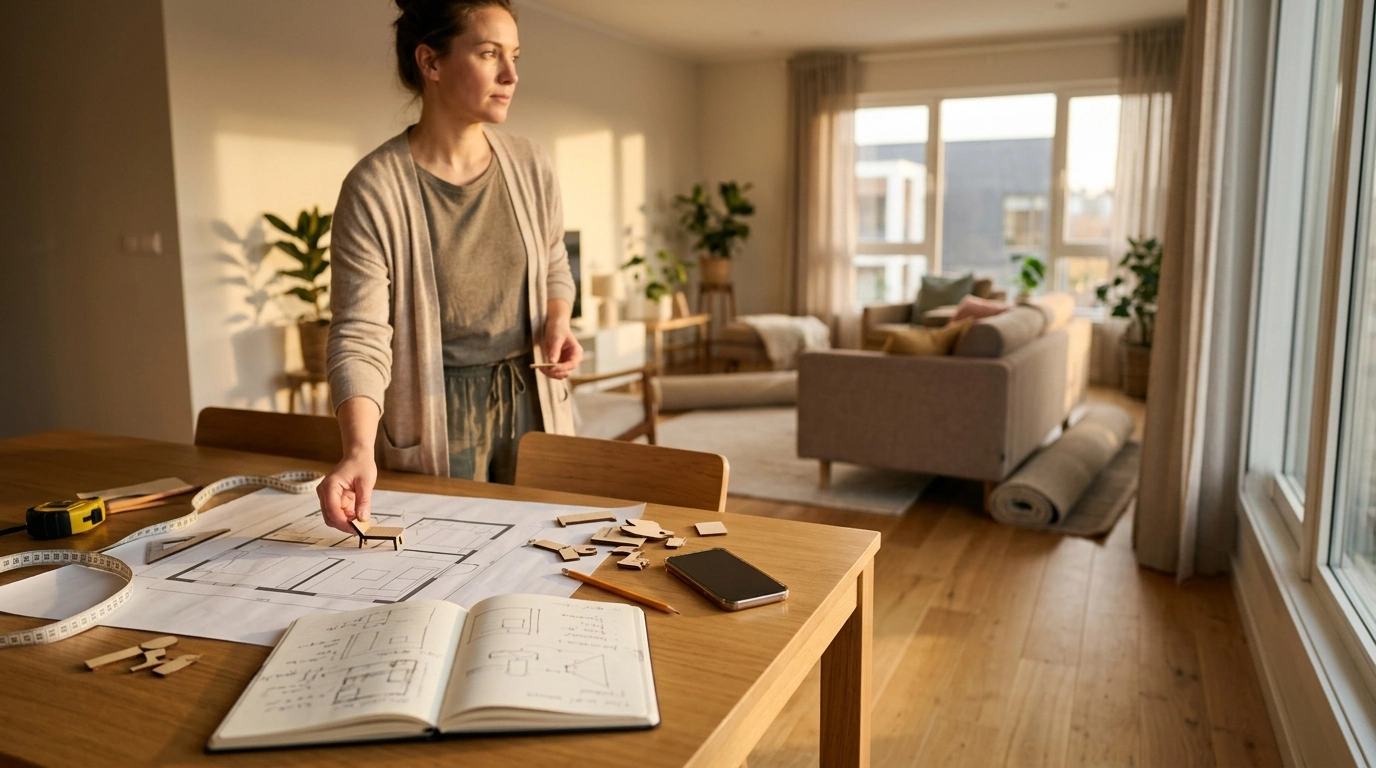
How do you plan a room layout that works?
Start with what you need the room to do, then arrange furniture to support those activities without blocking easy movement. A good layout feels natural to use: you can reach what you need, move between areas comfortably, and change the setup without shifting half the room.
List the room’s main activities
Write down how you use the space on a typical day, such as relaxing, working, eating, or playing. Decide which activity matters most and give it the clearest, most comfortable area. If several activities share the room, assign each one a zone instead of letting furniture compete for the same spot.
Map the fixed features and walking paths
Note the doors, windows, outlets, and any built-in features that affect where furniture can go. Keep a clear route between the entrance and the places you use most. Avoid placing large pieces where they interrupt door swings or make you squeeze past corners. Leave enough space to pull out chairs and open drawers or cabinet doors.
Choose a focal point for each zone
Use an anchor piece to make each area feel intentional: a sofa can define a conversation zone, while a desk can mark a work area. Arrange supporting furniture around that anchor, keeping frequently used items within reach. A rug, floor lamp, or compact side table can help distinguish a zone without adding a bulky divider.
Match furniture to the room and its use
Measure the room and the larger pieces before moving them. Mark furniture footprints on the floor with painter’s tape so you can test clearances and sightlines. Choose pieces that serve the way you use the space; storage ottomans, nesting tables, and cabinets with doors can make a shared room easier to adapt and keep tidy.
Test the arrangement before committing
Try the layout during your normal routine. Sit where you plan to relax, walk the main route, and check whether you can reach lights and storage. If a zone feels cramped or disconnected, move one piece at a time and reassess. For more ideas on creating flexible zones and smoother transitions, visit our guide to multipurpose room layouts.
FAQ
How can I make a room easier to reset after different activities?
Give shared items a dedicated storage spot near the zone where you use them, and favor lightweight furniture that is easy to move. A short reset routine—returning supplies, clearing surfaces, and restoring the main walking path—helps the room shift smoothly to its next use.
Recommended for you


The Right Portion: Feeding Your Aquarium Fish
Oct 1, 2026










Leave a comment