-
Shop
- Advanced Technologies
- AI Skills
- AI Skills for Creators & Freelancers
- AI Client Management
- AI Ethics
- AI Mindset
- AI Tools & Prompts
- AI Writing & Content Creation
- Audio, Voice & Music
- Design & Visual Creation
- Email, Messaging & Communication
- Freelancing & Business
- Marketing, Ads & Conversion
- Productivity, Workflow & Automation
- SEO & Search Optimization
- Social Media Content & Growth
- Strategy, Planning & Analytics
- Video Creation & Editing
- Apple Accessories
- Bathroom
- Beauty
- Best-Sellers
- Car Accessories
- Car Buying & Ownership
- Confidence
- Dating & Social Skills
- Digital Resources
- Education & Learning
- Family & Parenting
- Fashion
- Alexander McQueen
- Bags
- Balenciaga
- Blazers
- Bottega Veneta
- Brunello Cucinelli
- Burberry
- Chanel
- Chloé
- Dior
- Dolce & Gabbana
- Dresses
- Etro
- Fendi
- Gucci
- Jacquemus
- Jil Sander
- Kiton
- Luggage
- Miu Miu
- Off-White
- Outerwear
- Prada
- Rick Owens
- Saint Laurent
- Shoes
- The Row
- Tom Ford
- Valentino
- Valentino Garavani
- Versace
- Vivienne Westwood
- Fashion Accessories
- Furniture
- Gadgets
- Health & Beauty
- Health & Wellness
- Home Decor
- Home Electronics
- Home Styling & Organization
- Home Supplies
- Kids & Babies
- Kitchen
- Legend Footwear Brands Collection
- Lighting
- Luxury Brands Collection
- Online Business for Beginners
- Parenting & Child Development
- Patio, Lawn & Garden
- Personal Growth
- Personal Style & Fashion
- Pet Care
- Pet Lifestyle & Wellness
- Pet Supplies
- Pets
- Smart Amazon Shopping
- Smart Home Living Guides
- Super Deals
- Travel
- Travel & Adventure
- Wealth
- Wellness
- Popular
- Best deals
110V vs 220V Wall Instant Water Heater: LCD + Remote
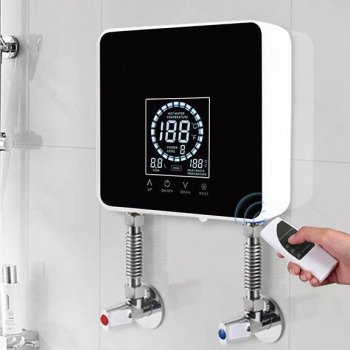
110V/220V Wall-Mounted Instant Electric Water Heater with LCD & Remote: Practical Guide to Setup, Use, and Fit
A wall-mounted instant electric water heater can be a clean, space-saving way to get hot water on demand at a sink, kitchenette, laundry area, or other point-of-use location. Instead of keeping a tank of water hot all day, it heats as water moves through the unit, which can reduce standby heat loss and help you avoid long waits at a distant fixture. This guide focuses on real-world basics—choosing between 110V and 220V, using an LCD display and remote for temperature control, installation details that prevent headaches, and how to judge whether performance will match the spot you have in mind.
What this type of instant heater is designed to do
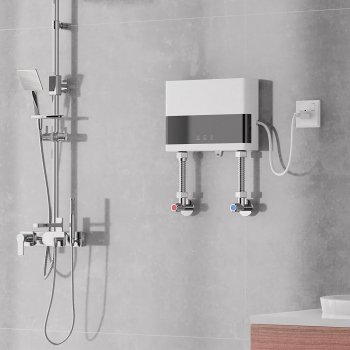
Wall-mounted tankless electric units are built to deliver hot water without storing a tank of pre-heated water. That “heat only when needed” approach is especially useful as a point-of-use solution for a single sink, small bathroom, bar sink, or utility sink where waiting for central hot water is inconvenient.
Because they mount on the wall, they can keep under-sink and floor space more open than many mini-tank options. Models with an LCD readout and remote are also designed to make temperature adjustments easier when the unit is placed higher on a wall or inside a tight utility closet.
Key features that matter in daily use (LCD and remote included)
An LCD temperature display is more than a nice-to-have: it makes it easier to confirm your set temperature at a glance and return to repeatable settings after someone else changes it. A remote control can be just as practical, letting you tweak temperature without reaching behind a basin or stretching to a higher mount.
Instant heating can feel “fast,” but it’s important to keep expectations grounded: outlet temperature depends heavily on flow rate and the incoming cold-water temperature. If the water is icy in winter or if the faucet is opened wide, the unit may deliver warm-to-hot rather than “steaming hot.” Wall mounting also tends to simplify cleaning around the installation area and can look more built-in than countertop devices.
110V vs 220V: choosing the right power connection
Voltage choice is often the make-or-break factor for comfort. A 110V setup is commonly simpler in locations where only standard household power is available. The tradeoff is that 110V units typically have less heating output, which can limit temperature rise at higher flow rates.
For energy and water-heating fundamentals, the U.S. Department of Energy offers a helpful overview here: U.S. Department of Energy — Water Heating.
Installation notes to avoid common problems
Temperature performance: what affects how hot it feels
For context on flow and efficiency, EPA WaterSense provides a clear explanation of household water use: EPA WaterSense — Learn About Water Use.
Safety, durability, and maintenance habits
Set temperature with scald prevention in mind—especially in homes with children, older adults, or anyone with reduced sensitivity. Many households aim for delivered hot water around 120°F (49°C), adjusting based on local guidance and needs. The U.S. Consumer Product Safety Commission covers scald risk and prevention here: U.S. CPSC — Scald Burns.
Where this wall-mounted instant heater is a strong fit
Quick spec-and-fit checklist
| Decision factor | What to verify | Why it matters |
|---|---|---|
| Power option | Whether the location supports 110V or 220V and appropriate breaker capacity | Determines potential heating performance and installation complexity |
| Point-of-use distance | How close the heater can mount to the faucet/sink | Shorter runs usually mean faster warm water and less heat loss |
| Typical flow rate | Faucet/shower flow and whether it can be reduced if needed | Higher flow can reduce outlet temperature on instant heaters |
| Incoming water temp | Seasonal cold-water temperature in the home | Colder input requires more heating for the same comfort level |
| Water hardness | Local water hardness level; presence of scale on fixtures | Hard water can increase maintenance needs and affect efficiency |
Product option available now
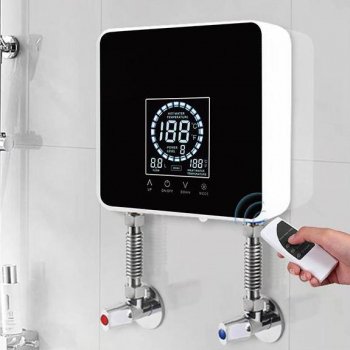
If you want a wall-mounted setup with straightforward temperature control, the 110V/220V Wall-Mounted Instant Electric Water Heater with LCD & Remote is an in-stock option designed for on-demand heating with a readable display and remote adjustments.
Other in-stock picks
Shopping for home upgrades at the same time can help consolidate deliveries. Two other items currently available include the Automatic Self-Cleaning Litter Box with Safety Features for Multi-Cat Households and AI-Powered Brand Magic: Craft Your Freelance Style Guide Fast | Ebook.
FAQ
Will an instant electric heater work for a shower as well as a sink?
It depends on the heater’s power rating, available voltage, incoming water temperature, and the shower’s flow rate. Sinks are often easier because typical flow is lower; for showers, confirm the expected temperature rise at your target flow before relying on it.
Is 220V better than 110V for an instant electric water heater?
220V commonly supports higher heating output and tends to perform better at higher flow rates. 110V can be simpler where only standard power is available, but it may have more limited temperature rise depending on conditions.
How should the temperature be set for safety and comfort?
A common household target is around 120°F (49°C) to reduce scald risk, then fine-tune based on who uses the fixture. Test carefully because low-flow situations can feel hotter than expected.












Leave a comment