-
Shop
- Advanced Technologies
- AI Skills
- AI Skills for Creators & Freelancers
- AI Client Management
- AI Ethics
- AI Mindset
- AI Tools & Prompts
- AI Writing & Content Creation
- Audio, Voice & Music
- Design & Visual Creation
- Email, Messaging & Communication
- Freelancing & Business
- Marketing, Ads & Conversion
- Productivity, Workflow & Automation
- SEO & Search Optimization
- Social Media Content & Growth
- Strategy, Planning & Analytics
- Video Creation & Editing
- Apple Accessories
- Bathroom
- Beauty
- Best-Sellers
- Car Accessories
- Car Buying & Ownership
- Confidence
- Dating & Social Skills
- Digital Resources
- Education & Learning
- Family & Parenting
- Fashion
- Alexander McQueen
- Bags
- Balenciaga
- Blazers
- Bottega Veneta
- Brunello Cucinelli
- Burberry
- Chanel
- Chloé
- Dior
- Dolce & Gabbana
- Dresses
- Etro
- Fendi
- Gucci
- Jacquemus
- Jil Sander
- Kiton
- Luggage
- Miu Miu
- Off-White
- Outerwear
- Prada
- Rick Owens
- Saint Laurent
- Shoes
- The Row
- Tom Ford
- Valentino
- Valentino Garavani
- Versace
- Vivienne Westwood
- Fashion Accessories
- Furniture
- Gadgets
- Health & Beauty
- Health & Wellness
- Home Decor
- Home Electronics
- Home Styling & Organization
- Home Supplies
- Kids & Babies
- Kitchen
- Legend Footwear Brands Collection
- Lighting
- Luxury Brands Collection
- Online Business for Beginners
- Parenting & Child Development
- Patio, Lawn & Garden
- Personal Growth
- Personal Style & Fashion
- Pet Care
- Pet Lifestyle & Wellness
- Pet Supplies
- Pets
- Smart Amazon Shopping
- Smart Home Living Guides
- Super Deals
- Travel
- Travel & Adventure
- Wealth
- Wellness
- Popular
- Best deals
Instantaneous Water Heater Disadvantages: Flow, Cost & More
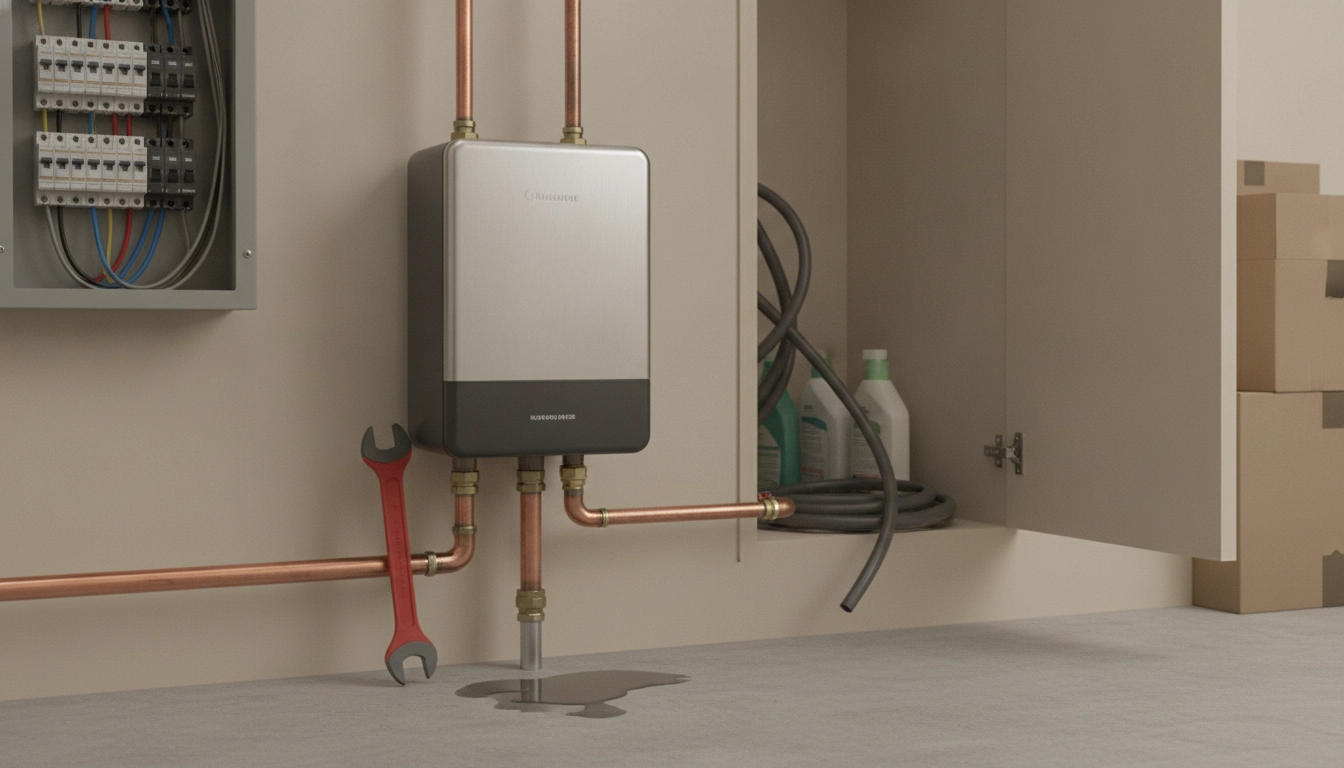
What is the disadvantage of an instantaneous water heater?
The biggest disadvantage of an instantaneous (tankless) water heater is that it can be limited by its flow rate and incoming water temperature, which may lead to lukewarm water or reduced performance when multiple fixtures run at once. While these systems can provide “endless” hot water in theory, they still have a maximum capacity—so a shower, dishwasher, and sink running together can push the unit beyond what it can heat in real time.
Common drawbacks to know before buying
Higher upfront cost: Instantaneous models often cost more than tank-style heaters, and installation can add expense—especially if electrical or plumbing upgrades are needed.
Electrical requirements (for electric units): Many whole-home electric tankless heaters require higher voltage (often 220V) and significant amperage. If a home is only set up for 110V circuits in the installation area, upgrading wiring or the breaker panel may be necessary.
Performance drops in cold climates: The colder the incoming water, the harder the heater must work. In winter or in colder regions, a unit that seemed adequate may deliver lower flow rates to maintain temperature.
“Cold water sandwich” and ramp-up time: Some setups can briefly deliver a burst of cooler water between hot-water draws, and there can be a short delay while the heater activates and stabilizes.
Maintenance needs: Mineral scale can build up inside tankless units, especially with hard water. Periodic descaling helps protect performance and lifespan, but it’s an extra task compared to some tank systems.
If you’re deciding between voltages, sizing, and real-world expectations for wall-mounted electric options, see the full guide here: https://journalle.com/guide-110v-vs-220v-wall-instant-electric-water-heater-lcd-remote-guide/.
FAQ
How do you size an electric tankless water heater for your home?
Choose a unit based on the maximum hot-water flow you’ll need at once (gallons per minute) and the temperature rise required from your incoming water temperature. Homes in colder areas typically need more power or a lower target flow to reach the same hot-water temperature.
Recommended for you
Best Instant Electric Water Heater: 110V vs 240V
Aug 5, 2026













Leave a comment