-
Shop
- Advanced Technologies
- AI Skills
- AI Skills for Creators & Freelancers
- AI Client Management
- AI Ethics
- AI Mindset
- AI Tools & Prompts
- AI Writing & Content Creation
- Audio, Voice & Music
- Design & Visual Creation
- Email, Messaging & Communication
- Freelancing & Business
- Marketing, Ads & Conversion
- Productivity, Workflow & Automation
- SEO & Search Optimization
- Social Media Content & Growth
- Strategy, Planning & Analytics
- Video Creation & Editing
- Apple Accessories
- Bathroom
- Beauty
- Best-Sellers
- Car Accessories
- Car Buying & Ownership
- Confidence
- Dating & Social Skills
- Digital Resources
- Education & Learning
- Family & Parenting
- Fashion
- Alexander McQueen
- Bags
- Balenciaga
- Blazers
- Bottega Veneta
- Brunello Cucinelli
- Burberry
- Chanel
- Chloé
- Dior
- Dolce & Gabbana
- Dresses
- Etro
- Fendi
- Gucci
- Jacquemus
- Jil Sander
- Kiton
- Luggage
- Miu Miu
- Off-White
- Outerwear
- Prada
- Rick Owens
- Saint Laurent
- Shoes
- The Row
- Tom Ford
- Valentino
- Valentino Garavani
- Versace
- Vivienne Westwood
- Fashion Accessories
- Furniture
- Gadgets
- Health & Beauty
- Health & Wellness
- Home Decor
- Home Electronics
- Home Styling & Organization
- Home Supplies
- Kids & Babies
- Kitchen
- Legend Footwear Brands Collection
- Lighting
- Luxury Brands Collection
- Online Business for Beginners
- Parenting & Child Development
- Patio, Lawn & Garden
- Personal Growth
- Personal Style & Fashion
- Pet Care
- Pet Lifestyle & Wellness
- Pet Supplies
- Pets
- Smart Amazon Shopping
- Smart Home Living Guides
- Super Deals
- Travel
- Travel & Adventure
- Wealth
- Wellness
- Popular
- Best deals
Embroidery on Puffer Jackets: Best Placement & Tips
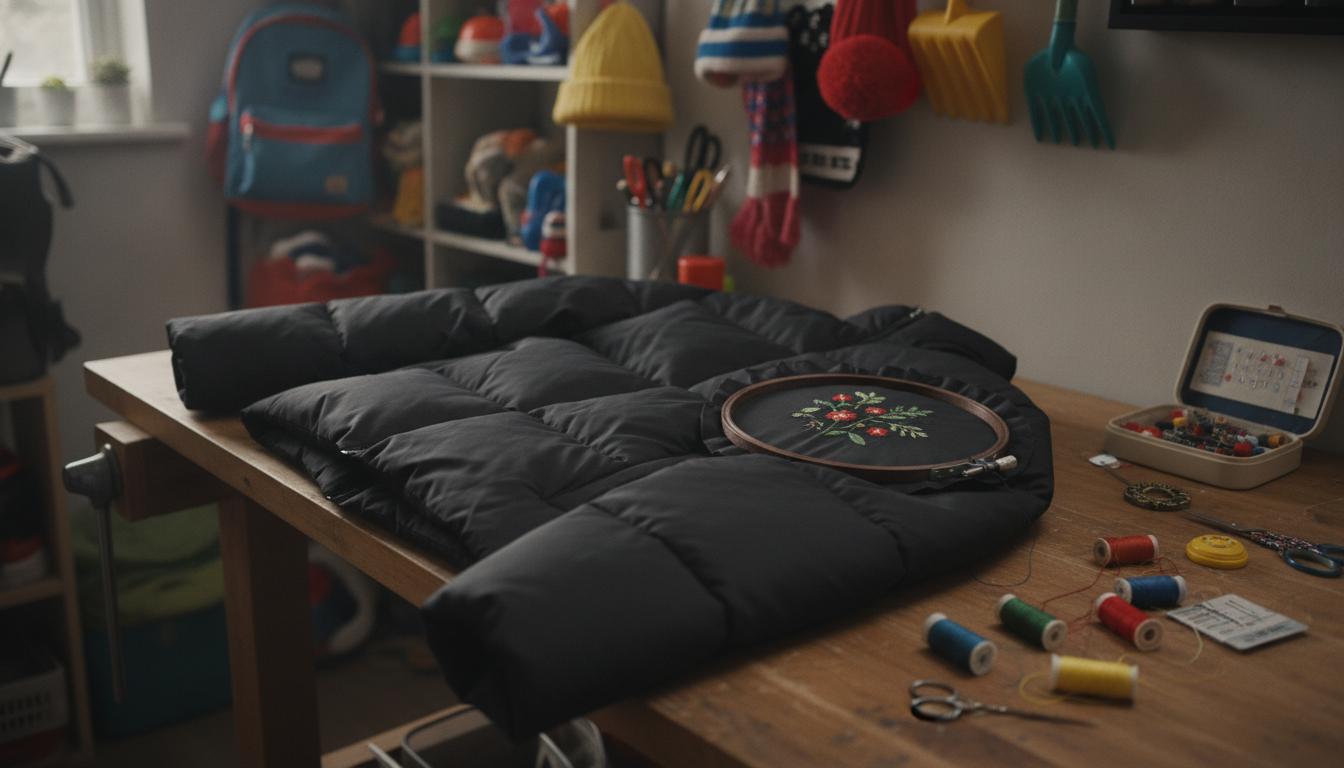
Can you do embroidery on a puffer jacket?
Yes—embroidery on a puffer jacket is possible, but it takes the right placement, stabilization, and technique. Puffers are bulky, slippery, and often filled with down or synthetic insulation, so stitching directly through the thickest areas can cause puckering, needle marks, or compressed “flat spots” that don’t bounce back.
What makes puffer jackets tricky to embroider?
Puffers are built with quilted channels and lofty fill. That loft can push fabric into the needle path and distort the design. Many shells are nylon or polyester with a water-resistant finish, which can show needle holes if the stitching is removed. Seams and baffles also create uneven thickness, making it harder to keep the hoop stable and the design aligned.
Where should embroidery go on a puffer?
The cleanest results usually come from flatter zones: an outer chest panel between baffles, a yoke area, or a sleeve section that doesn’t cross seams. Avoid stitching across quilt lines whenever possible. If the jacket has a lining access panel (or can be opened and resewn), embroidering from the inside can protect the insulation and help the outer shell lie smoother.
How to get the best results
Use a light-to-medium design with fewer stitches, especially on ultra-puffy styles. Stabilizer is essential: a cut-away backing is commonly used, and a topper can prevent the stitches from sinking into the fabric texture. Many shops prefer “floating” the jacket rather than tightly hooping it to reduce hoop marks and fabric distortion. Test stitchouts on a similar fabric are ideal before committing to the final piece.
When to consider alternatives
If the jacket is very lofty, high-gloss, or expensive, a patch (embroidered separately and then sewn on) can be safer and more replaceable. Heat-applied options may not be suitable for all puffers due to coatings and heat sensitivity.
For step-by-step tips, material considerations, and placement ideas, visit the full guide: https://journalle.com/can-you-do-embroidery-on-a-puffer-jacket/.
FAQ
Will embroidery ruin a puffer jacket’s insulation?
Not usually, but stitching through thick, lofty areas can compress fill and leave a permanent flattened spot. Choosing a flatter panel and using proper stabilization helps preserve the jacket’s warmth and shape.














Leave a comment