7 Golden Rules for Bedroom Design: Calm, Cozy, Clutter-Free
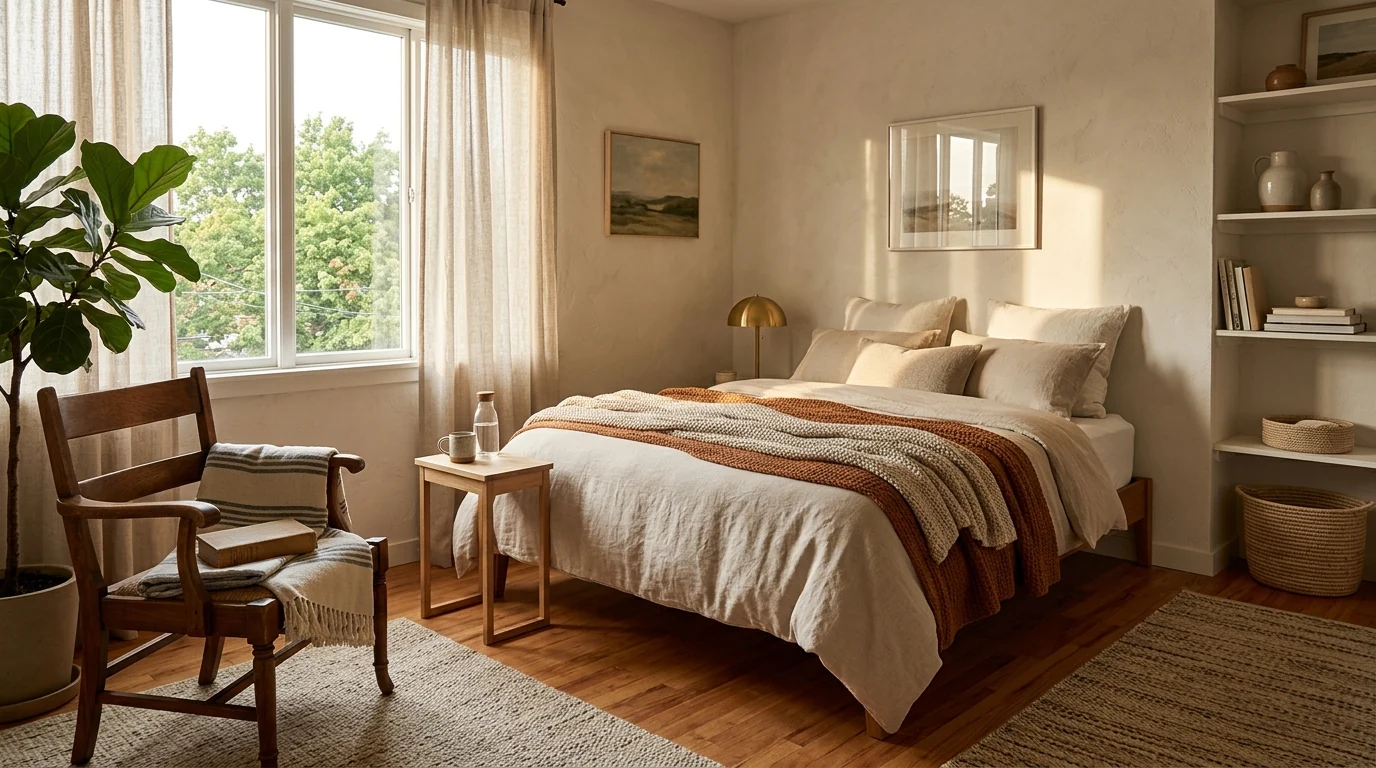
What are the 7 golden rules for bedroom design?
The best bedroom designs feel calm, functional, and personal—without looking cluttered. These seven golden rules help you make smart choices that improve sleep and elevate the room, whether you’re working with a spacious primary suite or a compact layout.
1) Start with the bed placement
Place the bed where it feels anchored—typically against the longest uninterrupted wall—and aim for balanced access on both sides when possible. Clear pathways matter more than perfectly centered furniture.
2) Use a layered lighting plan
Relying on a single overhead light makes a bedroom feel flat. Combine ambient lighting, bedside task lights for reading, and a softer accent option (like a dimmable lamp) for winding down.
3) Keep the palette soothing
Choose a cohesive color scheme with calming neutrals or muted tones, then add depth with one or two accent colors. A consistent palette makes even small bedrooms feel more spacious and intentional.
4) Prioritize comfort through texture
Mix materials—crisp bedding with a plush throw, a soft rug underfoot, and varied finishes on furniture—to create warmth. Texture adds luxury without adding visual noise.
5) Choose the right scale
Oversized nightstands and bulky dressers can overwhelm a room. Match furniture to the room’s proportions and leave breathing space around key pieces so the layout feels effortless.
6) Control clutter with smart storage
Use closed storage to keep surfaces calm: drawers, baskets, under-bed solutions, and streamlined wardrobes. Edit what’s visible so the bedroom reads as restful, not busy.
7) Add personality—sparingly
A bedroom should reflect you, but with restraint. A few meaningful artworks, a statement headboard, or curated decor beats a collection of small, scattered items.
For more space-smart ideas on layout, lighting, and texture, visit this luxury small bedroom guide.
FAQ
How do I make a bedroom feel luxurious on a budget?
Focus on fewer, better-looking upgrades: layered lighting, elevated bedding (even just a quality duvet cover), and a plush rug. Keeping surfaces uncluttered also instantly makes a room feel more high-end.












Leave a comment