-
Shop
- Advanced Technologies
- AI Skills
- AI Skills for Creators & Freelancers
- AI Client Management
- AI Ethics
- AI Mindset
- AI Tools & Prompts
- AI Writing & Content Creation
- Audio, Voice & Music
- Design & Visual Creation
- Email, Messaging & Communication
- Freelancing & Business
- Marketing, Ads & Conversion
- Productivity, Workflow & Automation
- SEO & Search Optimization
- Social Media Content & Growth
- Strategy, Planning & Analytics
- Video Creation & Editing
- Apple Accessories
- Bathroom
- Beauty
- Best-Sellers
- Car Accessories
- Car Buying & Ownership
- Confidence
- Dating & Social Skills
- Digital Resources
- Education & Learning
- Family & Parenting
- Fashion
- Alexander McQueen
- Bags
- Balenciaga
- Blazers
- Bottega Veneta
- Brunello Cucinelli
- Burberry
- Chanel
- Chloé
- Dior
- Dolce & Gabbana
- Dresses
- Etro
- Fendi
- Gucci
- Jacquemus
- Jil Sander
- Kiton
- Luggage
- Miu Miu
- Off-White
- Outerwear
- Prada
- Rick Owens
- Saint Laurent
- Shoes
- The Row
- Tom Ford
- Valentino
- Valentino Garavani
- Versace
- Vivienne Westwood
- Fashion Accessories
- Furniture
- Gadgets
- Health & Beauty
- Health & Wellness
- Home Decor
- Home Electronics
- Home Styling & Organization
- Home Supplies
- Kids & Babies
- Kitchen
- Legend Footwear Brands Collection
- Lighting
- Luxury Brands Collection
- Online Business for Beginners
- Parenting & Child Development
- Patio, Lawn & Garden
- Personal Growth
- Personal Style & Fashion
- Pet Care
- Pet Lifestyle & Wellness
- Pet Supplies
- Pets
- Smart Amazon Shopping
- Smart Home Living Guides
- Super Deals
- Travel
- Travel & Adventure
- Wealth
- Wellness
- Popular
- Best deals
Brain Boosters for Kids: Habits, Games & Safe AI
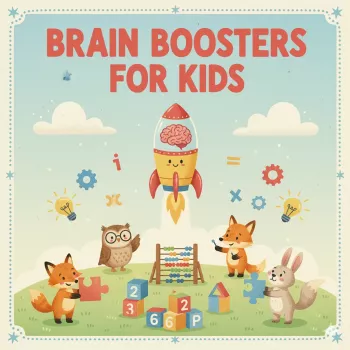
Brain Boosters for Kids: Memory-Boosting Habits, Playful Practice, and Helpful AI Tools
Kids remember best when learning feels safe, active, and meaningful. The most reliable “brain boosters” are daily habits (sleep, movement, nutrition), simple memory techniques practiced through play, and well-chosen tools that support focus without replacing real-world learning. The ideas below work for a wide range of ages; adjust the time, difficulty, and independence based on the child’s stage.
How Memory Grows in Kids
Memory isn’t one “skill”—it’s a set of systems that develop with practice, maturity, and the right environment.
- Working memory: holding information in mind long enough to use it (multi-step directions, mental math).
- Long-term memory: storing facts and experiences; strengthened by spaced practice and meaning.
- Attention is the gateway: if focus is fragmented, memory won’t “stick,” even with repetition.
- Stress and fear block recall: calm routines and supportive feedback improve learning efficiency.
- Skill-building beats cramming: short sessions repeated across days usually win over marathon study days.
Daily Brain-Boosting Habits That Make Learning Easier
Before adding more worksheets or apps, tighten the basics that help the brain encode and retrieve information.
- Sleep: keep a consistent bedtime and wake time; prioritize winding down (dim lights, quiet reading, no intense screens right before bed). The CDC provides age-based sleep guidelines parents can use to sanity-check routines.
- Movement: add short activity breaks (2–5 minutes) between homework chunks to refresh attention and improve encoding.
- Protein + fiber: aim for steady energy at breakfast and snacks (eggs, yogurt, nut/seed butter, oats, beans, fruit).
- Hydration: a water bottle within reach during study time reduces fatigue and “wander-off” moments.
- Sunlight and outdoor time: supports mood and circadian rhythm; even 10–20 minutes can help.
Helpful references: CDC — How Much Sleep Do I Need?, American Academy of Pediatrics — Media and Children, and APA — Stress resources.
Fun Learning Strategies That Strengthen Memory
Kids don’t need “more studying.” They need smarter practice that feels doable—and a little playful.
- Spaced practice: review the same material briefly across several days rather than one long session.
- Retrieval practice: ask the child to recall from memory (quick quizzes, “tell me three things you remember”) before re-reading.
- Interleaving: mix related skills (a few math facts + a word problem + a geometry question) to build flexible recall.
- Elaboration: connect new facts to something familiar (“How is a volcano like a shaken soda?”).
- Dual coding: pair words with simple sketches, icons, or color cues to improve recall.
- Teach-back: the child explains the lesson to a parent, sibling, or stuffed animal in 60 seconds.
| Situation | Game | Time | What It Builds |
|---|---|---|---|
| Before school | 3-item recall: remember breakfast, one plan, one goal | 2 min | Working memory + goal setting |
| Car ride | Category sprint: name animals/foods that start with a letter | 5 min | Retrieval speed + vocabulary |
| Homework break | Flash-and-draw: glance at a word, draw a tiny icon for it | 3 min | Dual coding + attention reset |
| After reading | One-minute teach-back: summarize without looking | 2–4 min | Comprehension + recall |
| Evening | Memory ladder: recall 1 thing, then 2, then 3 from the day | 3 min | Sequencing + long-term consolidation |
A Simple Weekly Routine (Without Overloading the Day)
Consistency matters more than intensity. A light routine can still deliver strong gains when it’s repeated.
- Keep practice short: 10–20 minutes per skill, 3–5 days per week, is often more effective than long weekend sessions.
- Use a predictable structure: warm-up (2 min), focused work (10–15 min), recall check (2 min), reward (small and immediate).
- Rotate subjects: reading comprehension one day, math facts the next, writing the next—then repeat.
- Make progress visible: use a sticker chart for “show your brain work,” not perfect scores.
- Swap friction for fun: turn review into a scavenger hunt, timed challenge, or “beat yesterday’s score.”
If you want a ready-to-use set of prompts, games, and routines that you can adapt by age, see the Brain Boosters for Kids | Guide with Tips for Boosting Memory in Kids, Fun Learning Strategies, and AI Tools.
AI Tools That Support Learning (Without Replacing It)
Used well, AI can make practice more personalized and less stressful. The goal is better thinking—not faster copying.
For parents (or older students) who like using AI to create consistent learning materials—like reusable checklists, mini rubrics, and practice scripts—AI-Powered Brand Magic: Craft Your Freelance Style Guide Fast | Ebook on AI to Create a Freelance Brand Style Guide for Creatives & Solopreneurs can help streamline how you organize templates and instructions so kids get clearer expectations.
Focus and Motivation: Small Changes That Prevent “Brain Fog”
When Extra Support Helps
FAQ
What are the best “brain boosters” for kids that don’t involve supplements?
Start with consistent sleep, daily movement, protein-and-fiber meals, hydration, and outdoor time, then add learning methods like spaced practice and retrieval practice. If supplements are being considered, it’s best to discuss them with a pediatrician.
How can memory practice stay fun when a child hates studying?
Keep sessions short, make them game-like (timed challenges, teach-backs, category sprints), and offer choices so the child has some control. Track progress based on effort and strategy use, not perfect scores.
Are AI tools safe for kids’ learning?
They can be safer when an adult supervises, privacy settings are age-appropriate, and kids avoid sharing personal information. Use AI mainly for hints and practice (not final answers) and follow school rules for technology and homework.
Recommended for you

Is Jeff Bezos a Brunello Cucinelli Guy?
Jul 28, 2026













Leave a comment